That Loony Yid

Blessed are You, Adonai, our G-d, King of the universe, Who has sanctified us with His commandments and has permitted us to engross ourselves in the words of Torah. Please, Adonai, our G-d, sweeten the words of Your Torah in our mouth. May we and our offspring know Your Name and study your Torah for its own sake.

Monday, September 11, 2006

To Stand Before G-d - Parasha Nitzavim

Devarim 29:9 - 30:20

"The Torah reading of Nitzavim (Deuteronomy 29-30) is always read on the Shabbat before Rosh Hashanah, as we prepare to stand before G-d to be judged for our deeds of the bygone year. These closing days of the year are a time for self-examination, for a thorough assessment of our mission in life and the steps we have taken—and need yet to take—toward its realization.

Nitzavim thus opens with Moses’ statement to the people of Israel: “You stand today, all of you, before G-d your G-d: your heads, your tribal leaders, your elders, your officers, and all men of Israel; your children, your wives, and the stranger in your camp; from the hewer of your wood to the drawer of your water.”" (Wisdom Reb)

This Parasha asks us to do the almost impossible - it asks us to be personally responsible as individuals on a collective level. This is the "We" of all the prayers in the Siddur - the moment when we are both completely transparent to G-d as individuals and as a People. G-d is counting His Children - this is a census. Do we count ourselves among "the hewers of wood and the drawers of water", and consent to be counted or do we prefer that G-d didn't SEE us?

Judgement. To most of us it sounds harsh, cold and final. Everything we are or have done, are not and have not done is being scrutinized - or so we think about "Judgement" - but is that truly the point of Rosh ha-Shana? Is that why G-d is holding a census?

Perhaps what G-d wants more than anything is to SEE us there, before Him, like any Father would want to SEE his family, his children? Perhaps that is the purpose of this Holy Day - a Feast Day when G-d is celebrating with His Children up close and personal. A Feast Day when we look forward to the new coming year with hope that it will bring us joy, growth, life and more opportunity to make Dad proud. G-d wants us to Meet Him face to face, trusting that He, like the King in the Midrash will meet us on the Road - knowing that what we lack He will add, so that we meet the Family Standard.

"All Present and Accounted for!"

Rosh HaShana kicks off those days leading up to Yom Kippur - The Day of Atonement - The Day of Awe - when we clean house, make sure that those things we failed at during the past year gets a re-view and a re-newed committment - and not just for those who are actually there, but also for those who are absent, either in mind or body. On Rosh HaShana we start over, with a full deck - and those who are not there in some way, will be counted as if they were - G-d takes one look at "us" and says: "All Present and Acounted for" - in many ways Rosh HaShana is a repeat of The Revelation on har Sinai - we were all there - now we are being counted again, and deemed accountable.

I like being seen as accountable, I like being responsible, being part of that "We", that regardless of personal culpability is being counted as responsible for those who are not counting themselves as we move towards Yom Kippur.

Do you count yourself?

May we all have a good and sweet year ahead of us, come Rosh HaShana. May we all be Present and Accounted for!

Shabbat Shalom!

posted by Dov at 4:01 AM 0 comments
Friday, September 08, 2006

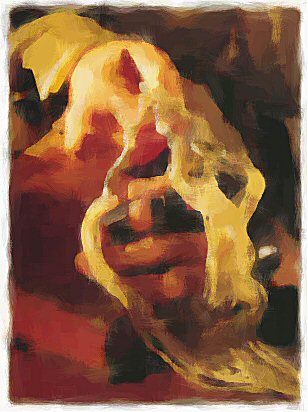
On the importance of Tzitzi'ot


"'Speak unto the children of Israel, and bid them that they make them throughout their generations fringes in the corners of their garments, and that they put with the fringe of each corner a thread of blue. " (Bamidbar/Numbers 15:38)

A fellow Blogger told a story the other day about the importance of wearing tzitzi'ot (fringes).

The story inspired me, not only to start wearing tzitzi'ot myself on a regular basis (i.e every day) as opposed to when I remember or when I feel comfortable wearing them (yes, yes, SHAME on me, violating Torah and all...) it also inspired me to look at WHY I grew lax on fullfilling this mitzvah.

Fear.

Fear of being identified as Jewish, fear of shaming Torah, because I often fail to live up to it's standards, fear of attracting attention in a non-Jewish area, where I am often harrased for being Jewish.

The story inspired me to look at the Mitzvot of Torah (Commandments) not at tasks that have to be fullfilled, because that's what a Jew is supposed to do, but as something that is tied in with Life itself. Wearing tzitzi'ot literally saved the life of the man in the story. And even if I don't think I will ever have to rely on my tzitzi'ot that way - it probably will help me improve my life as a Jew and as a person. And isn't that what observing Torah is all about?

Betterment of self.

Shalom!

posted by Dov at 1:09 AM 0 comments

Thursday, September 07, 2006

And you shall live in terror?

"And it shall be on the day when ye shall pass over the Jordan unto the land which the LORD thy God giveth thee, that thou shalt set thee up great stones, and plaster them with plaster. And thou shalt write upon them all the words of this law, when thou art passed over; that thou mayest go in unto the land which the LORD thy God giveth thee, a land flowing with milk and honey, as the LORD, the God of thy fathers, hath promised thee." (Devarim/Deu 27:2-3)
I'd like to connect this Parsha to what I wrote on Parasha Shoftim about Israel's responsibility and obligation to Live by Torah's Ethical Imperative in respect to the Stranger.

When Moshe is about to die, and he instructs the People one last time about what they are to do when they have entered the Land that G-d has given them: First they are to offer thanks to G-d for the Land, for the Covenant and for personal privileges and accountability, but before they do that they are to make sure that the Covenant and the Laws of that Covenant are visible to all who come to dwell there - and then the consequences of adhering or not adhering to the Laws of that Covenant is to be read out loud - as a consecration of the Land. It is as if G-d wants to make sure that His Torah is thoroughly imprinted, not just in the People, but in the very Land. Violating Torah means Violating the Land, because Torah is imprinted on the Land.

While each Jew is certainly personally responsible for obeying Torah, and are asked to affirm this in Devarim/Deu 26:2-10, this Parasha clearly speaks about the ENTIRE people as a Collective - and not just the People, but the stranger as well - Devarim/Deu 26:11. If they fail to observe the statutes of Torah, horrible things will happen to them.

This is where Judaism gets its idea of Reward and Punishment from. The first time Torah speaks of Reward for obedience is in Shemot/Exo 20:12 - "Honour thy father and thy mother, that thy days may be long upon the land which the L-RD thy G-d giveth thee." The implication of a Punishment if disobeyed is also there. Violating Torah means Violating the Land.

People don't want to hear about the consequences of disobeying Torah - they would much rather hear about the Blessings enumerated in the chapter following the Curses - yet the Curses (Deu 27:15-26; Deu 28:16-19) come before the Blessings (Deu 28:3-6) thus somehow spelling out that we should be aware more of the negative consequences of our actions, rather than what we can gain from acting right.

In Deu 28:66, G-d admonishes in a manner that connects to the present situation in Israel:

"The life you face shall be precarious; you shall be in terror, night and day, with no assurance of survival." (Deu 28:66)
Over and over Israel is warned that forgetting the Stranger, the Widow and the Orphan will put her in the dog-house with G-d. Over and over, also in this Parasha, is she admonished that wrong-doing has its price. So why does she insist on wronging the Stranger? Why does the Modern State of Israel keep forgetting the Holy Charge given to her in ancient times? Deu 1:16 (2), Deu 10:18-19 (2), Deu 14:29, Deu 24:17, Deu 24:19-21 (3), Deu 26:11-13 (3), Deu 27:19, Deu 31:11-12 (2) - to treat the Stranger equal to the Home-born?

This makes me think that the consequences of not caring for those, also those not Jewish, that need it or to wrong ANY human being, is the terror wrought on Israel today. Deu 27:19 is tied to Deu 16:20 by the word JUSTICE - the promise of life and prosperity for the pursuit of Justice is echoed in Deut 28:66, in a manner that almost makes my skin crawl. How can she not see this, and what will it take for her to wake?

Shalom Shabbat!

Dov

posted by Dov at 9:37 AM 0 comments

Monday, September 04, 2006

Without Justice there can be no Peace

"Justice, justice shall thou pursue!" (Devarim/Deut 16:20 - Parasha Shoftim)

"By three things the world is preserved, by Justice, by Truth and by Peace, and these three are one: if Justice has been accomplished, so has Truth and so has Peace" (JT Taanit 4:2, after Rabbi Shimon ben Gamliel and Rav Muna)

"Rebbe Nachman of Breslov said: there is truth, the truth of the truth, and peace. Truth is: a kid stole an apple. The truth of the truth is: the kid was hungry. Peace is: Nobody stole anything; give the kid an apple!" (Heard from Reb Shlomo Carlebach)

Justice - tzedek (righteousness) means that something is right or has been righted.
Truth - emet (truth) means the stability of facts. That the facts are reliable and accurate.
Peace - shalom (perfection), means that nothing is missing, that all is well.

When all that is wrong has been righted and there are no more needs, because all is well, then there is also Peace.

That is why Torah tells us to pursue Justice. We are obligated to seek out that which is wrong, imbalanced, unequal, and make it right, and when we do, we bring Peace.

Jewish Justice is not blind it is said that when G-d had just created the World He had a conversation with Torah:
"Nor is this world inhabited by man the first of things earthly created by G-d. He made several worlds before ours, but He destroyed them all, because He was pleased with none until He created ours. But even this last world would have had no permanence, if G-d had executed His original plan of ruling it according to the principle of strict justice. It was only when He saw that justice [tzedek] by itself would undermine the world that He associated mercy [chessed] with justice, and made them to rule jointly." (Legends of the Jews - Creation)
Thus tzedek - righteousness was born. When applying Justice, setting things right, we, like G-d, must take into account ALL circumstances present before passing judgement, without consideration to anything but what is right AND compassionate.

When one considers the situation in Israel/Palestine, it becomes clear that both parties must practice Tzedek and Chessed (Righteousness and Mercy) Justice with Compassion.

Both must do away with lawlessness and consider the other with compassion and seek what is right for both. The only way to do that, in my mind, is to look for the Truth [emet] and the Truth of the Truth - i.e honestly state what is happening and acknowledge the causes for those events on both sides. That is hard, because it means putting stop to the blame game - on both sides. It means being responsible and accountable.

It pains me that Israel is failing to heed the words in Shoftim "Justice, justice shall you pursue!", because by failing that she has failed to live up to Torah's admonition:

"I the L-RD have called thee in righteousness, and have taken hold of thy hand, and kept thee, and set thee for a covenant of the people, for a light of the nations; " (Yisheyah/Isa 42:6)

Torah True Justice doesn't mean letting criminals get away - it means making sure that all be brought to court and given an unbiased hearing. It doesn't mean not defending oneself or those dependent on you from attack, it means going after the criminals AND showing compassion towards those that are not criminals.

Torah clearly teaches that in war, there are certain Laws that must be followed, and I don't think anyone denies that Israel is in a state of War. Destroying land, trees or peoples' livelihoods are not permitted. Peace must be offered and clearly be declined before any attack. Also in a war of defense there are Laws that must be followed:

One may not:

1] Kill an innocent third party to save a life;

2] Compel a person to risk his life to save the life of another;

3] Kill the pursuer after his evil act is over as a form of punishment.

4] Use more force than minimally needed.

More on Jewish Law and the matter of War

It doesn't serve Israel to go after the Palestinian PEOPLE for the criminal actions of Palestinian terrorists - it would be more fruitful to try and get the Palestinian People's co-operation through aiding them in achieving prosperity and well-being independently from the criminal terrorists, including the Palestinian Governmental branches that actively endorse terrorism.

In the end this would inspire the Palestinians to start policing themselves, because co-operating with Israel in good things, such as not harboring criminals, not accepting and encouraging violent attacks on Israel and not destroying what help they recieve from Israel and the International Community, is more profitable than the opposite.

Will taking out the criminals with one hand and helping the non-criminals with the other achieve Peace? In the end it will - Chicken Soup goes a long way in hungry hearts, minds and stomachs.

It irritates the drek out of me that there are religious Jews that shrug over this and "hide" behind "Moshiach will sort it out...!" The Jewish People have been charged with the task of being a Light to the Gentiles NOW, not shockling for the coming of the Moshiach. Moshiach will come when it is time, but Justice, Truth and Peace is for the now.

It also aggravates me enormously that some Jews seem to regard Gentiles as some sort of lower class of people, and therefore do not practice Tikkun Olam and Tzedakah in relations to non-Jews. Especially since Torah clearly states that the Law is the same for the Jew and the Gentile and that the Stranger must not be wronged. (Vayikra/Lev 24:22; Shemot/Ex. 22:21; 23:9; Vayikra/Lev 19:33 etc...)

It seems that the idea that Gentiles are lesser people, that reside with some, is connected to the idea of Israel's Chosenness, that somehow, because we are Chosen we are also above the Law - it is the very opposite. We are Chosen because G-d decided to charge us with the obligation of the Law. G-d gave us the Law so we should LIVE it and pass it on in actions. This is our Holy Duty.
"It hath been told thee, O man, what is good, and what the L-RD doth require of thee: only to do justly, and to love mercy, and to walk humbly with thy G-d". (Mic 6:8)
The fact that others do not live this way, does not free Israel from her Holy Obligation of pursuing Justice nor does it give Israel a mandate to disregard the plight of others, when there is a need or when there is an opportunity to practice Torah. How can Israel be a Light to the Nations if she does not Shine?
"Justice, justice shalt thou follow, that thou mayest live, and inherit the land which the L-RD thy G-d giveth thee." (Deu 16:20)
In fact this pursuit of Justice [tzedek] guarantees that Israel (and Palestine) will eventually live in peace.

Dov

posted by Dov at 2:02 AM 0 comments

Friday, September 01, 2006

Second take on Parasha KiTeitzei (Dev 21:10-25:19)

Devarim 21:10-14

The Captive Woman
Günther Plaut suggests in "Torah, A Modern Commentary" that the Laws about the woman captured in war present an ideal and are merely theoretical, rather than actual, practical legislation. I disagree with Plaut on this.

Apart from what the passage 21:10-21 can inspire and suggest, as is done by Rashi when he connects the three "characters" in the passage into a family unit with a bad ending - I believe those are Laws given to both safe-guard the citizens of nations Israel goes to war with, to guarantee theat Israeli warriors treat captives ethically. Why?

Torah doesn't ever command without a reason - Torah never deals in theory and ideals. It is always practical in its applications.Israel is supposed to be "a light to the nations" (Isa 42:6; 49:6; 51:4). So Torah has to set forth Laws that makes the Jewish People ethically different than "the Nations" in its dealings with people.

In a world where rape, pillage, plunder and abuse was the order of the day in war-time, Israel has to be set apart from this. So, Torah legislates that, IF in war-time, one sees a beautiful woman, one is not to rape her or mistreat her, but one is obligated to give both her and oneself TIME - her to mourn her family and adjust to the new situation, and oneself to "cool off" and decide whether to marry her or not. During this waiting time one is to treat her well, give her new clothes, resources for keeping herself clean and neat, and then after a month has passed one is permitted to have sex with her - in Torah marriage is entered through the act of sex. Should one, after that month realize that one has made a mistake, one is to release her back to her people - even if one decides to marry her and then realizes that a mistake has been made, one must release her. One may not add to her humiliation (the act of capturing her is seen as a humiliation, and no doubt was seen as such by her and by her family) by selling her as a slave. She must go free.
---
Devarim 21:15-17

The Hated Wife
Ok, so the mistake has been made - one married the girl, out of lust most likely, if she becomes hated, and now one is stuck with a wife one doesn't care the least for - but there's a child from that marriage. So one marries again, out of love - another child is born. Anyone who has been in a divorce situation, as an adult or as a child, knows just how easy it is to making differences between the kids, especially if one really dislikes the ex-spouse. Torah forbids this. Each child must be treated right - for its own sake and not because who its other parent is. A very good example of what can happen is Yaakov and his 12 sons - Yosef and Benyamin were the sons of Rakel - the other 10 were sons of Leah - it's not hard to imagine that Yaakov if not disliked Leah, then at least didn't like her - but he loved Rakel, and subsequently he treated his two youngest differently than the other ten. What happened? Jealousy, hatred and violence. Yosef ended up missing, presumed dead. Why? Because Yaakov clearly favored him, despite Torah telling him and us that such is forbidden.
---
Devarim 21:18-21

The Rebellious Son
"Honor thy father and mother" (Shemot 20:12)

It is said about this son that he is a glutton and a guzzler - i.e an overeater and an alcoholic - and he refuse to accept his parents chastisement to change his ways. Now, what do they need to do - bring in help from the out-side. Shake him - after all he is killing himself. Torah acknowledges that there are instances when parental love and guidance simply isn't enough, and a policy of estrangement has to be practiced in order to bring about change. Does this mean that Torah prescribe the death penalty for addicts and problem children? No. The description of the penalty, "pelt him with stones" - doesn't appear anywhere else in Torah - there are offenses that was punished by stoning - but here is says "pelt him with stones" - I think the graphic description is there to underscore the severity of the offense - dishonoring and disrespecting your parents. But also the sverity of out-of-control eating and drinking. To me this "out-of-control eating and drinking", signifies any action done to excess. Moderation, Torah says, moderation.

Honoring one's parents doesn't mean that we should blindly follow any directions given to us by our parents - after all parents aren't always Torah observant or G-d fearing people, but it says that we should give them credit and the benefit of the doubt when our understanding differ from theirs, consider their experience and weigh it before dismissing it. Honoring one's parents is also a matter of honoring oneself, as we are part of our parents. Gluttony and Drunkeness is hardly respectful of oneself.

Shalom!

posted by Dov at 10:37 AM 0 comments

A Family Gathering

This weeks Parasha starts with a section (Devarim 21:10-20) that is rather gruesome - it looks like Torah is sanctioning rape in war time, only making it look like something else. And it continues with talking about a hated wife, and how one must not treat his children by her differently than those he has by a wife he loves - even if the loved one's son is the younger. Finally the passage ends with how a rebellious son is to be punished for his disrespect towards his parents.

Really ugly - what does such a text do in Torah?

"10. If you go out to war against your enemies, and the Lord, your God, will deliver him into your hands, and you take his captives, 11. and you see among the captives a beautiful woman and you desire her, you may take [her] for yourself as a wife. 12. You shall bring her into your home, and she shall shave her head and let her nails grow. 13. And she shall remove the garment of her captivity from upon herself, and stay in your house, and weep for her father and her mother for a full month. After that, you may be intimate with her and possess her, and she will be a wife for you. 14. And it will be, if you do not desire her, then you shall send her away wherever she wishes, but you shall not sell her for money. You shall not keep her as a servant, because you have afflicted her. 15. If a man has two wives-one beloved and the other despised-and they bear him sons, the beloved one and the despised one, and the firstborn son is from the despised one. 16. Then it will be, on the day he [the husband] bequeaths his property to his sons, that he will not be able to give the son of the beloved [wife] birthright precedence over the son of the despised [wife]-the [real] firstborn son. 17. Rather, he must acknowledge the firstborn, the son of the despised [wife] and give him a double share in all that he possesses, because he [this firstborn son] is the first of his strength, then he has the birthright entitlement. 18. If a man has a wayward and rebellious son, who does not obey his father or his mother, and they chasten him, and [he still] does not listen to them, 19. his father and his mother shall take hold of him and bring him out to the elders of his city, and to the gate of his place. 20. And they shall say to the elders of his city, "This son of ours is wayward and rebellious; he does not obey us; [he is] a glutton and a guzzler." 21. And all the men of his city shall pelt him to death with stones, and he shall die. So shall you clear out the evil from among you, and all Israel will listen and fear."


Rabbi Baruch Sienna once told me that some times troublesome texts are in Torah, to teach us how not to behave, not because Torah condones all kinds of gruesome actions.

Rashi clarifies this by connecting the three characters to each other as if they were family.

The woman in the beginning of the passage, because she is made a wife under less than ideal circumstances, becomes the hated wife in the middle of the text, who gives birth to the man's first son - the one who in the end of the passage despises and disrespects his parents - this way the less than ethical treatment bestowed on his mother in the end punishes itself in that the man ends up having a son that hates him too.

To me this reads as the Torah Commenting on Domestic Violence - the woman in the beginning of the text is taken captive, abused, and under "nice forms" forcibly married to the man (for all practical purposes she is raped) - the children that issues from this union are by their very conception abused by the abuse inflicted on their mother - they grow up despising their father, who in turn despise them, because they remind him of his ill-treatment of their mother, and in the end they become what "shames" him. The words from the last verse "So shall you clear out the evil from among you, and all Israel will listen and fear." doesn't necessarily imply the rebellious children but the entire situation - mistreat people and in the end they will turn against you, not only in the first generation, but in the second generation as well.

Shalom Shabbat!

Dov

posted by Dov at 3:03 AM 0 comments

Sunday, August 06, 2006

Why is Jerusalem Still Burning?

Consider and reflect upon an astonishing thing: Everything happens in its time for the good. The portions which we always read during the Three Weeks, Matos, Massei and Devorim, discuss the victory of Israel over the nations and the division of the Land – the diametric opposite of the terrible events that happened during this time . Sometimes we also read Pinchas during this period, which discusses all the holidays… related to the fact that in the future “these days will be transformed into joy and gladness and holidays” (Zechariah 8:19) – Shaloh Mesechta Taanit.

As the Middle East enters a second week of war with Israeli troops expanding their operations in Southern Lebanon launching a ground assault against its sworn enemy Hezbollah – and our hearts and prayers go out to all innocent lives being lost – its hard to ignore the connection to this period in time when we remember the war destruction of Jerusalem two millennia ago by the Babylonians and then again by the Romans.

No one is disputing the fact that the Hezbollah attack against Israel – and indeed the entire existence of the Hezbollah – is founded on the principle of conquering Israel and is being fueled, funded and armed by Syria and Iran – the location of ancient Babylon, which at its height included the land that is now Syria and a large part of Iran (Persia).

Babylon of old attacked Israel. So did the empires of Assyria, Persia, Ptolemy, Rome, Byzantine, the Crusaders, the Arabs and Ottomans. And the same story is now being replayed in the same geographical area – is this a coincidence?

After 2428 years since the Babylonian destruction and 1938 years since the Roman destruction of the Holy Temple why is Jerusalem still burning?

And what can we do about it?

As we compare this most recent conflict with previous ones, striking parallels and differences stand out.

The most obvious parallel is the never-ending battle over this small piece of geography called Israel.

But what is far more striking – and disturbing – are some of the unique differences that distinguish the current battle from previous ones.

One of the most obvious issues today is the lack of strong leadership and clear moral direction. Yes, every normal person or country agrees that Israel has a right to defend itself from wanton attacks on its innocent citizens. But is that enough?

We still hear questions whether Israel is responding in “disproportionate” measure. For some reason, many people are questioning whether this is a justifiable war? Why? Would the same be said if, for instance, terrorists were launching unprovoked missiles from Algeria to France, or from Mexico to the United States?

Is it possible that Israel is being second0guessed because Israel itself is suffering from an identity crisis and lack of clarity? Yes, under attack all of Israel is united in the commitment to defend itself at all costs. But the haunting questions remains: The six million Jews living in Israel are surrounded by hundreds of millions of Arabs and Muslims most of whom (if not all) do not want Israel there. If they had there way, and there was no military deterrent, a large number of them would actually support the elimination of the Jewish State (G-d forbid) and even those that may not go to war against Israel would not be greatly disturbed if Israel ceased to be.

In such a hostile environment what good reason is there for Jews to live in Israel, surrounded by millions of enemies? If you moved to a neighborhood with high hopes for a comfortable life and then the neighborhood deteriorates, what would most people do? They would move to another neighborhood.

Is it possible that many are wondering the same about the Jews in Israel? Do Israelis themselves have this question? And if they do, what is the answer.

Another unprecedented factor in the current battle is the new type of war being fought. Previous wars involved defined nations, with defined borders and clear targets. A war against terrorists – whether it is in Baghdad, Lebanon, Gaza, London or New York City – poses a new set of challenges: Whom exactly are you fighting? Where is the enemy located? This type of war requires new terms of engagement.

Why is it that Israel’s victory in 1967 against four major countries, Egypt, Syria, Jordan and Iraq took only six days, and now their battle against one upstart terrorist organization is already over 9 days old and far from ending?

Some would argue, that a war against defined countries is far easier to fight than one against terrorists embedded in tunnels and caves within a countries infrastructure, hiding behind civilian shields, with arsenals dug in beneath hospitals and schools. Other may contend that the six-day war was A Divine miracle.

Another factor may be that it is far easier to win a war when there is strong leadership, and an army passionately motivated by a defined vision and goal – as it was in the war of 1948 and 1967. Does that passion exist today?

Years of slow-bleeding battles and relentless terrorist attacks have worn down many people. The ultimate question is this: Why in the first place are Jews living in a hostile neighborhood?

And even if you have an answer, what is the game-plan? How will this all end?
Questions abound. Many questions indeed.

But we are never abandoned in our questions and doubts. The Jewish people have been here before. Throughout their long history of persecution, their ultimate solace and strength came from the Torah, called the Torah of life – a blueprint to face every challenge in life.

During the Three Weeks of destruction we read in the Torah chapters that address the issues swirling around Israel and Jerusalem under siege – as the Shaloh writes in the opening quote of this article: The portions which we always read during the Three Weeks, Matos, Massei and Devorim, discuss the victory of Israel over the nations and the division of the Land – the diametric opposite of the terrible events that happened during this time .

Barely a consolation, yet the battle over Jerusalem is not new. And by looking at the past we can learn much for the present and future.

This Shabbat we also bless the month of Av. Av consists of two letters: Alef and bet – an acronym for the two nations that destroyed the two temples: Adom (the Roman Empire) and Babylon.

Our troubles in the Middle East did not begin today. They are an extension of unresolved forces unleashed millennia ago – events that set in motion a series of conflicts that plague us to this very day.

Edom (Rome) is the Western, Christian world – descendants of Esau. Babylon is the Eastern, Arab, Muslim world – descendants of Ishmael. All global confrontations are a result of the strange bedfellows created back in the home of Abraham (see Abraham’s Vision).

So what does all of this have to do with current events? How do historical roots help us deal with our present challenges?

The three chapters we read during these Three Weeks contain some answers:

Pinchas – Healthy Passion

Pinchas is the only zealot ever condoned in the Torah. Pinchas took a stand against a public atrocity and killed the perpetrators, consequently saving thousands of lives. Pinchas is subsequently rewarded with the “covenant of peace.”

What does this teach us about modern day zealotry and its dangers? Haven’t we learned our lessons over history of the grave destruction perpetrated in the name of G-d by religious extremists?!

As discussed at length in a previous article (Religious Violence), Pinchas was the ultimate model of a peaceful warrior: When confronted with cruelty some people shy away in fear, others become morally ambivalent and yet others become radical zealots, mercilessly killing innocent people in the name of (distorted) faith.

Comes Pinchas the man of peace and tells us that there is another option: No extremes, no bringing in your own personal prejudices and feelings of aggression or passivity, violence or comfort zones. Pinchas teaches us simple selflessness to protect and defend innocent lives. Zealousness – but in peace.

What we learn from Pinchas is the exact opposite of killing in the name of religious zealotry. Violence against other people, especially innocent ones, can never be tolerated – no matter what its cause. Any justification of violence, whether it is in the name of religion or in the name of fighting for a cause, is unequivocally deplorable and goes against the laws of G-d. Anger and murder resulting from religious feelings is perhaps the most dangerous of all, because the “holy war” helps mask the venting of personal aggression.

On the other hand, Pinchas teaches us, just because religion has been abused and used to perpetrate atrocities we shouldn’t fall to the other extreme of not fighting for any values. We must never lose sight of right and wrong, but at the same time we must learn from the past how to fight for it with selfless passion.

What is needed today is passion – but guided by humility. G-d – but guided by love and compassion. We need a zealot today. A true Pinchas that will rise and defy conventional thinking. Not a murderous zealot but a zealot of peace.

Today we are called to join forces in a zealous and passionate against all form of extremism and violence, including those perpetrated in the name of religious zealotry. To counter the passion of misguided souls ready to blow themselves up, we need to zealously defend and promote the Divine principles of justice and peace – and all in the spirit of unity and love fueled by selflessness.

Matos-Massei – Fortitude in the journey

“Matos” (in Hebrew) are stiff, firm rods. “Massei” are journeys, referring to the forty-two journeys of the Israelites through the Sinai Wilderness on their way to the Promised Land.

Life is a journey – a series of journeys – toward the Promised Land. Indeed, the Baal Shem Tov explains that each of us goes through 42 journeys in our lives.

The journey toward the Promised Land (even when we may be living there) is a difficult one – as witnessed time and again throughout history. We therefore need the “Matos” in our “Massei” – an unwavering fortitude, based on deep faith that gives us the relentless power to forge ahead despite regardless of the adversary.

Life can be difficult, very difficult. The only power to counter all our hardships and enemies comes from a profound, unwavering, connection to knowing the purpose of our lives and knowing without a shred of doubt that our fight is just; an absolute, unbending (“Mattos”) moral certainty in our calling, and the resulting absolute determination to see the journey through.

Where do we get this fortitude? From Devorim – Divine words

“These are the words which Moses spoke…”

The fifth book of the Torah documents the words that Moses spoke to the people in the last 37 days of his time on Earth: “These are the words which Moses spoke to all Israel beyond the Jordan in the wilderness, in the Arabah over against Suph, between Paran, and Tophel, and Laban, and Hazeroth, and Dizahab.”

Moses was the ultimate leader. Knowing that he has a short time to live, and recognizing the difficult challenges laying ahead, Moses – as a true leader – delivers his final words in order to imbue the people – then and in all generation to come – with the strength and confidence to forge ahead and tackle every possible issue. Moses examines the events that occurred over the last 40 years since they left Egypt, he discusses the relationship the Jews had established with G-d, G-d’s instructions to them, and he encourages them to carry on these teachings for the generations to come.

More specifically, Moses reviews the difficult journey of the Jewish people toward the Promised Land and reaffirms the reason for their journey – to forge an invincible bond with G-d that will empower the people to transform the material universe into a Divine home. Moses offers the Jewish nation strong words of encouragement and direction that by holding on to their connection to the Divine they will be able to face any challenge, no matter how difficult.

Moses’ words live on forever. Especially in time of war and challenge we need the powerful, unwavering words of Moses to infuse us with hope, courage and direction.

Above all, Moses’ words state the ultimate – and only – justification for the Jewish presence in Israel today:

“Behold, I have set the land before you: go in and possess the land which G-d swore to your fathers, to Abraham, to Isaac, and to Jacob, to give to them and to their seed after them” (Deuteronomy 1:8).

“Israel, listen to the laws and rules that I am teaching you to do, so that you will remain alive and come to occupy the land that G-d is giving you (4:1). Safeguard and keep them since this is your wisdom and understanding in the eyes of the nations (4:6). Only take heed and watch yourself very carefully, so that you do not forget the things that your eyes saw. Do not let leave your hearts, all the days of your lives. Teach your children and children’s children” (4:9).

And the end game?

“G-d will then bring back your remnants and have mercy on you. G-d will once again gather you from among all the nations where He scattered you… bring you to the land that your ancestors occupied. G-d will be good to you and make you flourish even more than your ancestors” (30:3-5).

Meanwhile – Moses concludes – “be strong and brave” (31:6).

It’s amazing that after all these years the secret to redemption eludes us but still remains in our hands: “Zion will be redeemed with Law and its captives with righteousness” (Isaiah 1:27. Haftorah of Shabbat Chazon).


Torah study and charitable righteous deeds will redeem Zion and its hostages.

How much longer will Jerusalem burn? That’s up to us.

by Simon Jacobson
C 2006 The Meaningful Life Center. All rights reserved. http://www.meaningfullife.com/.
----
Shalom!

posted by Dov at 11:56 PM 0 comments

Tuesday, July 11, 2006

Old Habits Die Hard

Last Week's Parasha - Chukkat
Ok, so I am bit slow, I admit. I just had to mull this over for a bit.

Bamidbar/Numbers 20:6-12
"Moses and Aaron moved away from the assembly to the entrance of the Tent of Meeting, and they fell on their faces. [Then] the glory of the Lord appeared to them. The Lord spoke to Moses, saying: "Take the staff and assemble the congregation, you and your brother Aaron, and speak to the rock in their presence so that it will give forth its water. You shall bring forth water for them from the rock and give the congregation and their livestock to drink." Moses took the staff from before the Lord as He had commanded him. Moses and Aaron assembled the congregation in front of the rock, and he said to them, "Now listen, you rebels, can we draw water for you from this rock?" Moses raised his hand and struck the rock with his staff twice, when an abundance of water gushed forth, and the congregation and their livestock drank. The Lord said to Moses and Aaron, "Since you did not have faith in Me to sanctify Me in the eyes of the children of Israel, therefore you shall not bring this assembly to the Land which I have given them." (translation from Chabad.org)
Why did Moshe use his Staff and not his Voice? One reason I can see is that old habits die hard. For almost 40 years had Moshe been striking rocks for water so the people could drink - and now G-d decides to change the MO - it really isn't fair to Moshe, but there it is - "Do it Differently". Tough luck Moshe, that you, like the rest of us, are human and follow what you KNOW to be effective, rather than follow directives...for most of us it's about throwing away "extra" screws or forgetting the salt when assembling IKEA furniture or making Chopped Liver - it can be fixed, no real damage done - but for Moshe it meant the end of a Dream. Old Habits Die Hard.

Another angle on this story focuses on the entirety of the Freedom March that starts in Shemot and ends in Devarim - on that of Generations. The Generation that left Egypt to become Free is at this stage dying off, one by one - Miriam is gone, Aharon is about to go, and it's time for Moshe to turn his staff over to Joshua. It's a matter of a Shift, from Action to Words. Each step of the way, the old Generation had trusted the tangible signs brought by Moshe's Actions - but now, as the new Generation takes over, new methods to impart faith and loyalty are required.

Why? Because, the old Generation stood for that which is Revealed - The Torah Covenant on Sinai - the new Generation stands for that which is Carried - The Torah Itself.
For this commandment which I command you this day, is not concealed from you, nor is it far away. It is not in heaven, that you should say, "Who will go up to heaven for us and fetch it for us, to tell [it] to us, so that we can fulfill it?" Nor is it beyond the sea, that you should say, "Who will cross to the other side of the sea for us and fetch it for us, to tell [it] to us, so that we can fulfill it?" Rather,[this] thing is very close to you; it is in your mouth and in your heart, so that you can fulfill it. (Devarim/Deuteronomy 30:14.)
For that shift to take place visually, Moshe needs to do it the old way, despite the directives from G-D. That which worked in the Desert will not work in the Land - perhaps Moshe recognizes this need for a shift, and deliberately disobeys G-D, to so-to-speak, get rid of himself, for surely he knows that direct disobedience will result in punishment, in that case, what Moshe does is a very brave thing - like Avraham before him, he risks angering G-D to rescue his People
And Abraham approached and said, "Will You even destroy the righteous with the wicked? Perhaps there are fifty righteous men in the midst of the city; will You even destroy and not forgive the place for the sake of the fifty righteous men who are in its midst? Far be it from You to do a thing such as this, to put to death the righteous with the wicked so that the righteous should be like the wicked. Far be it from You! Will the Judge of the entire earth not perform justice?" And the Lord said, "If I find in Sodom fifty righteous men within the city, I will forgive the entire place for their sake." And Abraham answered and said, "Behold now I have commenced to speak to the Lord, although I am dust and ashes. Perhaps the fifty righteous men will be missing five. Will You destroy the entire city because of five?" And He said, "I will not destroy if I find there forty-five." And he continued further to speak to Him, and he said, "Perhaps forty will be found there." And He said, "I will not do it for the sake of the forty."
And he said, "Please, let the Lord's wrath not be kindled, and I will speak. Perhaps thirty will be found there." And He said, "I will not do it if I find thirty there." And he said, "Behold now I have desired to speak to the Lord, perhaps twenty will be found there." And He said, "I will not destroy for the sake of the twenty." And he said, "Please, let the Lord's wrath not be kindled, and I will speak yet this time, perhaps ten will be found there." And He said, "I will not destroy for the sake of the ten." And the Lord departed when He finished speaking to Abraham, and Abraham returned to his place.(Bereshit/Genesis 18:23-33).
Moshe is Playing Chess with G-D and he wins - one would think that G-D ought to have learned from Avraham - "never argue with dedication..."

Shalom!

posted by Dov at 7:26 PM 0 comments

About Me

My Photo
Name: Dov
Location: Sweden

View my complete profile

The artworks, text and photos in this Blog are © Henric C. Jensen aka Shadow Bear and are NOT public domain, unless otherwise specified.

Links

  • My other Blog
  • About Boys and Dragons
    Just what it says...
  • Site Feed

Previous Posts

  • To Stand Before G-d - Parasha Nitzavim
  • On the importance of Tzitzi'ot
  • And you shall live in terror?
  • Without Justice there can be no Peace
  • Second take on Parasha KiTeitzei (Dev 21:10-25:19)
  • A Family Gathering
  • Why is Jerusalem Still Burning?
  • Old Habits Die Hard
  • The Priestly Blessing.
  • To Strike With a Shoelace...

Archives

  • May 2006
  • June 2006
  • July 2006
  • August 2006
  • September 2006
www.flickr.com
ShadowBear's photos More of Shadow Bear's Art

Powered by Blogger


Web Site Hit Counters
REIOutlet.com Coupon Code